

You've spotted holes in your yard, noticed tunnels crisscrossing your lawn, or found your garden plants mysteriously damaged. Now you're wondering: what's causing this destruction? In Contra Costa and Alameda Counties, two common culprits are ground squirrels and moles, but they require completely different control strategies.
Dealing with yard damage and need help identifying the pest? Call California Exterminating Services at (925) 438-6454 or fill out our online contact form for a property assessment.
Why Identification Matters
Before you invest time and money into pest control, you need to know exactly what you're dealing with. Ground squirrels and moles may both create holes and tunnels, but they behave differently, eat different things, and respond to different control methods. Using the wrong approach can waste your resources and allow the problem to get worse. Understanding which pest is in your yard helps you take targeted action that actually works.
What Ground Squirrels Look Like and How They Behave
Ground squirrels are rodents you'll actually see running around your property during daylight hours. They have tan or gray-brown fur with lighter spots or stripes, small rounded ears, and bushy tails. Adult ground squirrels typically measure 9 to 11 inches long, not counting their tails.
These animals are active above ground and live in colonies, which means if you see one, there are likely more nearby. Ground squirrels are most active during the day, especially in the morning and late afternoon. They hibernate during winter months but emerge in spring, which is when many homeowners first notice damage.
Ground Squirrel Damage Signs
Ground squirrels create visible burrow openings that are 3 to 4 inches in diameter. You'll find these holes throughout your yard, often with pathways connecting them where grass has been worn down from repeated use. Here's what to look for:
- Large, open holes with excavated dirt piled nearby
- Multiple entrances to the same burrow system
- Worn trails between holes where squirrels travel
- Damage to plants, including eaten fruits, vegetables, and bulbs
- Gnaw marks on irrigation lines, sprinkler heads, and wooden structures
- Droppings near burrow entrances
Ground squirrels eat seeds, nuts, fruits, and vegetables from your garden. They'll also gnaw on irrigation systems and can damage building foundations if their tunnels extend underneath structures. Because they're visible pests, you might spot them sitting upright near their burrows or darting across your lawn.
What Moles Look Like and How They Behave
Moles are much harder to see because they spend almost their entire lives underground. These small mammals have velvety gray or black fur, paddle-like front feet designed for digging, and tiny eyes and ears. They're about 6 to 8 inches long with a pointed snout.
Unlike ground squirrels, moles are solitary animals. You typically won't have a colony problem, though you might have several moles in different areas of your property. Moles remain active year-round and work around the clock, though they're most active during early morning and evening hours.
Mole Damage Signs
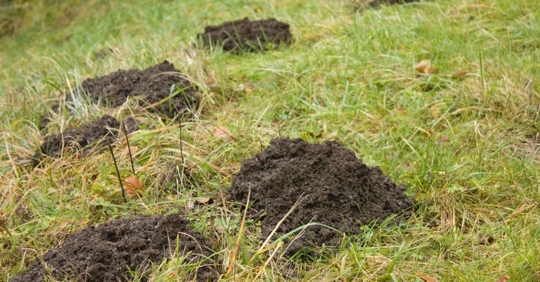
Moles create distinctive raised ridges across your lawn as they tunnel just below the surface searching for food. They also create deeper tunnels with volcano-shaped mounds. Professional mole control starts with recognizing these signs:
- Raised surface tunnels that feel soft when you walk on them
- Cone-shaped dirt mounds (molehills) with no visible opening
- Dying grass along tunnel routes where roots have been disturbed
- Spongy or uneven lawn surface
- Damage concentrated in areas with moist, rich soil
Moles primarily eat earthworms, grubs, and other soil insects. They don't eat plants, but they damage root systems as they tunnel, which kills grass and plants indirectly. The good news is that moles can actually help aerate your soil and reduce harmful insect populations, though most homeowners find the cosmetic damage unacceptable.
Side-by-Side Comparison
When you're trying to identify your yard pest, compare what you're seeing to these key differences:
- Visibility: Ground squirrels are frequently seen above ground during the day. Moles are rarely seen and stay underground.
- Holes: Ground squirrels create open burrow entrances 3 to 4 inches wide with dirt scattered around. Moles create cone-shaped mounds with no visible opening and raised tunnel ridges.
- Diet: Ground squirrels eat plants, seeds, fruits, and vegetables. Moles eat insects, earthworms, and grubs but not plants.
- Social Behavior: Ground squirrels live in colonies with multiple animals. Moles are solitary and territorial.
- Activity Time: Ground squirrels are active during daylight, especially morning and afternoon. Moles work around the clock but are most active at dawn and dusk.
The Impact on Your Yard
Both pests create problems, but the type of damage differs significantly. Ground squirrels cause more direct destruction to your plants and landscaping. They'll eat your vegetables, damage irrigation systems, and their extensive burrow systems can undermine walkways, patios, and even building foundations. In agricultural areas of Contra Costa and Alameda Counties, they're known to cause substantial crop damage.
Moles create mostly cosmetic problems. The raised tunnels and molehills make your lawn look unsightly and create tripping hazards. Roots get severed as moles tunnel through, which kills grass and plants. If you have a golf-course-quality lawn or spend significant time on landscape pest control, moles can quickly undo your efforts.
Why DIY Solutions Often Fall Short
Many homeowners try store-bought repellents, traps, or other DIY methods before calling for professional help. These products rarely work as advertised because ground squirrels and moles are persistent, adaptable animals. Repellents might temporarily move them to a different part of your yard, but they don't solve the underlying problem. Traps require proper placement, the right bait or trigger setup, and regular monitoring to be effective.
Additionally, California has specific regulations about how certain wildlife can be controlled. Using improper methods can be ineffective at best and illegal at worst. Professional pest control specialists understand local wildlife patterns, know which methods are both effective and compliant with regulations, and can implement solutions that address the root cause rather than just the symptoms.
Get Professional Help with Your Yard Pest Problem
Whether you're dealing with ground squirrels, moles, or another yard pest, California Exterminating Services can help you reclaim your outdoor space. Our team has extensive experience identifying and controlling the specific pests that affect properties throughout Contra Costa and Alameda Counties. We'll assess your property, confirm which pest you're dealing with, and recommend ground squirrel control or mole management solutions tailored to your situation.
Contact us at (925) 438-6454 or complete our online contact form to schedule a property assessment.